


When the current-generation Hyundai Tucson landed in 2021, it arrived before the full wave of Chinese brands reshaped the SUV market. Back then, competition was already tough, but the Tucson stood tall as one of the segment leaders thanks to its design, tech and all-round polish. Fast forward a few years and the landscape looks very different. Choice has exploded, prices are under pressure, and buyers are spoilt for options.
So where does that leave something like the Tucson today? After spending time with the midlife facelift Tucson R2.0D N Line AWD, the answer is reassuringly simple. There is still very much a place for it, especially if you value substance over novelty.
Hyundai deserves credit for not chasing trends for the sake of it. Rather than reinventing the Tucson, the facelift refines what was already a strong design. The updated front end now features a sharper parametric grille and a more rugged bumper treatment, giving the SUV a slightly tougher look. Around the back, subtle revisions to the bumper and skid plate complete the refresh.
The overall design remains modern and distinctive, and crucially, it still looks fresh in a market where some rivals already feel like they are trying too hard.
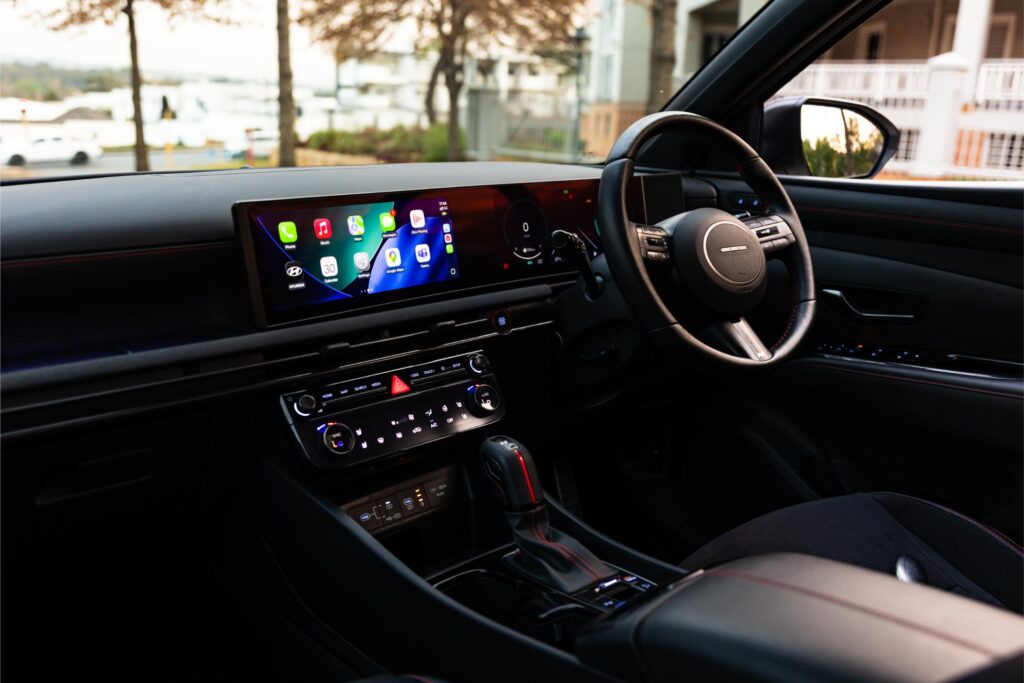
Step inside and the biggest updates reveal themselves. The cabin has been reworked with a cleaner, more contemporary layout, centred around a new 12.3-inch panoramic curved display that stretches across the dashboard. The system is quick, responsive and easy to use, which is something not all rivals can claim.
Specification levels are generous, with highlights including a Bose premium sound system, heated leather and suede seats, multiple USB ports and a panoramic sunroof. It is a comfortable, well-insulated space that feels built to last, reinforcing the Tucson’s reputation as one of the most solidly put-together cars in its class.
Space remains a strong suit. There is ample headroom and legroom for both front and rear passengers, making it genuinely comfortable for five adults. Boot space measures a healthy 582 litres, which should be more than enough for family trips or airport runs without turning luggage Tetris into a competitive sport.
Powering the facelifted Tucson is a 2.0-litre turbo-diesel engine producing 137 kW and 416 Nm of torque, paired with an 8-speed automatic transmission and all-wheel drive. It is a drivetrain that prioritises smoothness and refinement over outright excitement, and that suits the Tucson’s character perfectly.
Acceleration is confident and relaxed, highway cruising is effortless, and the AWD system adds an extra layer of reassurance when road conditions deteriorate. It feels planted, composed and predictable, which are qualities many buyers will appreciate long after the novelty of flashy tech wears off.

Fuel efficiency is another highlight. Hyundai claims a combined consumption of 7.4 L/100km, and during our time with the Tucson we managed 7.3 L/100km. That is an impressive real-world result for an SUV of this size and capability.
The facelifted Hyundai Tucson R2.0D N Line AWD proves that you do not need to reinvent the wheel to stay relevant. With its solid build quality, refined driving experience, strong diesel powertrain and comprehensive tech offering, it remains one of the most complete and dependable SUVs on the market.
At R859,900, it may not be the cheapest option in the segment, but it justifies its price with quality, comfort and long-term credibility. In a world full of new contenders, the Tucson quietly reminds you why it has been a benchmark for so long. Pricing for the Hyundai Tucson R2.0D N Line AWD kicks off at R859,900.
